


Roy Wood Jr. Speaks Truth with a Smile

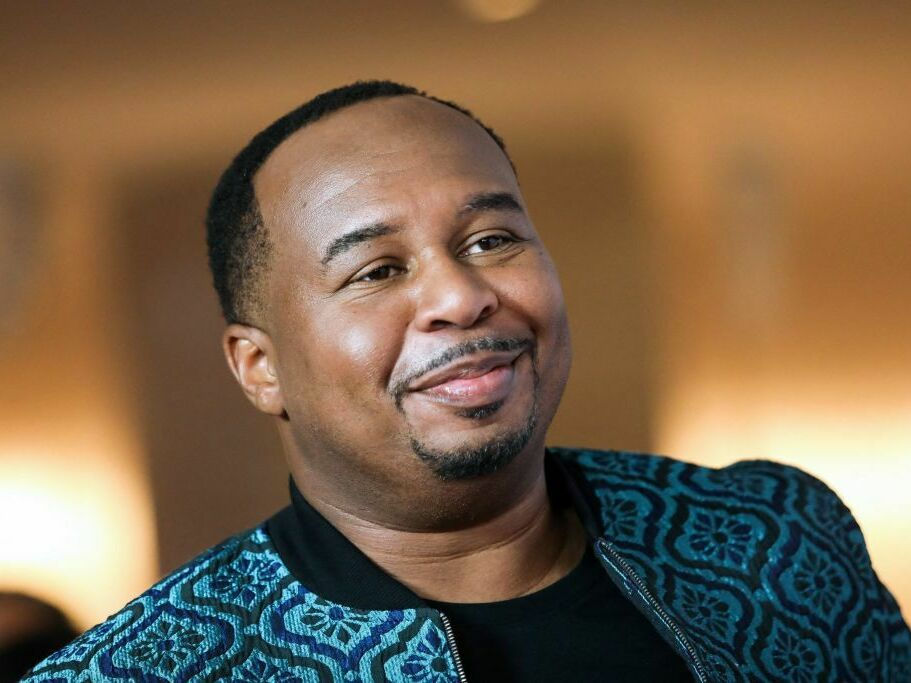
Source: Getty Images
By Llerraj Esuod
Finding His Voice
The stage lights are low, the mic stand wobbles, and Roy Wood Jr. leans in with his signature half-smile that warns something sharp is coming. The laugh that follows isn’t just loud—it’s loaded, each joke honed to cut clean and land with purpose. Before he became a correspondent on The Daily Show and host of CNN’s Have I Got News for You, his voice took shape at Florida A&M University (FAMU), where raw observation turned into razor-edged insight and personal pain became lasting comedic payoff. That foundation set the course for everything that followed.
“I try my best, when I’m away from FAMU, to honor the university in how I carry myself,” he says. “Because someone might decide to attend based on what they see in me.”
That sense of responsibility, born during his college years, propelled him from open mics to hosting the 2023 White House Correspondents’ Dinner. And it all began at FAMU with a fake late-night show—an offbeat class project he turned into comedy gold.
“In one of my college classes, I decided to make a mini Larry King Live show just to get a laugh,” he recalls. “It was supposed to be a throwaway assignment. Now I’ve got a show on CNN. It’s amazing how things come full circle.”
Honed at the Highest Hill
Born in New York and raised in Birmingham, Alabama, Wood arrived at FAMU with the instincts of a truth-teller. His father, Roy Wood Sr., was a pioneering journalist and radio host whose voice carried influence in Black media and advocacy.
“My dad fought for what was right and spoke up against injustice,” Wood says. “I just figured out a funnier way to do the same thing.”
In Tallahassee, his worldview widened. A roommate from Miami introduced him to new food, slang, and music—immersing him in a broader spectrum of the Black experience than he’d known in Alabama. Late-night conversations, shared meals, and cultural exchanges broadened his horizons and gave him material that would eventually shape his stagecraft.
Events like the Florida Classic, Bike Week, and Coconut Grove’s Goombay Festival provided a front-row seat to traditions he had only read about.
“Alabama was a very Black American experience,” he says. “But being in Florida was a Black diaspora experience. It opened me up to so many ways Black people exist.”
Those moments became his training ground. Hosting talent shows, writing radio sketches, and learning to read a crowd taught him to connect with people first—and deliver the closer that made it stick.
Back to the Classics
That broader worldview deepened his commitment to preserving the traditions of Historically Black Colleges and Universities (HBCUs). Wood supports the Orange Blossom Classic (OBC), one of the most celebrated HBCU football events, and attends for the culture as much as the competition.
“The OBC stands out because it kicks off the fall season with so much love,” he says. “It’s a way for us to see each other, celebrate each other. There’s nothing like it.”
Even when joking about not knowing his “official role,” he embodies the success, humility, and culture that FAMU represents.
“I’m always trying to figure out how I can contribute long-term to FAMU and the HBCU community,” he says. “It’s got to be more than showing up and being seen.”
The Mistake That Made the Man
His path wasn’t without detours. The fluorescent lights in the holding cell hummed, as if they knew his name. Cold steel pressed against his wrists, each click of the handcuffs driving the reality deeper. Like many students, Wood had made a costly mistake—an arrest for credit card fraud that threatened to end his college career and derail his future in comedy.
“You get them ice-cold handcuffs on, standing in that intake line, and you think, ‘This is my life now.’”
The hours crawled by—the clatter of keys, the murmur of officers, the quiet calculation of whether he had a way out. That way came in the form of a probation officer who looked beyond the charge sheet, recognized his potential, and gave him the chance to keep performing.
“I was lucky. Someone let me keep working and not violate probation,” he explains. “But for many, that’s not how it goes. One unexpected car repair can be the difference between freedom and jail—that’s how the system is set up.”
That close call gave his comedy an edge, turning it into a weapon against injustice and a voice for those rarely offered a second chance.
Laughter with a Purpose
From that point on, Wood’s sets carried more weight. He blended personal experiences with sharp political commentary. In one bit, he jokes about being pulled over in Alabama—drawing laughs before letting the room fall silent—making the truth of racial profiling land harder.
“I think comedy can be a tool during times of political tension or racial injustice,” he says. “Not always with answers. But with a fresh lens.”
That lens—shaped by his father, refined at FAMU, and tested nationwide—has made him one of America’s most respected cultural commentators.
The Work Ahead
If 2025 is any indication, Wood’s voice is only growing louder. He began the year with his Hulu stand-up special Lonely Flowers (January 2025), which paired personal history with cultural critique. His memoir, The Man of Many Fathers, is set for release later this year and offers a candid look at the forces that shaped him.
On-screen, he stars in Love, Brooklyn (August 2025) and appears in Outcome, expanding his reach beyond stand-up. He’s also set to host the 85th Peabody Awards and the 46th Sports Emmys—high-profile stages that show his influence now stretches far beyond comedy clubs.
And he’s still behind the desk at CNN’s Have I Got News for You, where his quick wit keeps audiences engaged with the headlines that matter.
Words for the Next Rattlers
When asked what he’d tell FAMU students stepping into careers that challenge the status quo, Wood doesn’t hesitate.
“Make no mistake—it’s coming,” he says. “Be ready for it. Don’t be afraid to say the thing that makes people uncomfortable. That’s where real change starts.”
That conviction follows him into every performance.
“I’m not just there to be funny,” Wood says. “I’m there to start conversations, to leave something behind.”
As the lights dim, his words remain—sparking thought long after the applause fades.


Comments